Vitamin K2 and D3: An Essential Synergy for Health
DANKEPHARM · 10 min read · Nutriție · 03/08/2026

Discover the fundamental role of vitamins D3 and K2 in maintaining bone health and vascular functions, and why European formulations often combine them.
The Importance of Vitamins D3 and K2: A European Perspective
In a European context where attention to nutrition and food supplements is growing, vitamins D3 and K2 hold a special place. These two fat-soluble vitamins, although often considered separately, exhibit an important synergy in the body, being essential for multiple physiological processes. Understanding how they work together and their individual roles is fundamental for maintaining overall well-being. Modern European formulations increasingly recognize this interdependence, integrating both vitamins into products aimed at supporting health.
The role of vitamin D3 is perhaps the most widely known among the general public, due to its direct involvement in the normal absorption and utilization of calcium and phosphorus, minerals crucial for bone structure. On the other hand, vitamin K2, although less publicized, plays an essential complementary role, contributing to the maintenance of normal bones and, in a specific form, to normal blood clotting. The European approach emphasizes the importance of an integrated perspective on health, where nutrients act in concert to support optimal body function.
Vitamin D3: The Cornerstone of Calcium Metabolism
Role in Calcium Absorption and Bone Health
Vitamin D3, also known as cholecalciferol, is synthesized in the skin under the influence of ultraviolet B (UVB) rays and can also be obtained from certain foods or supplements. Its primary function in the body is to contribute to the normal absorption of calcium and phosphorus from the intestine. This process is vital, as calcium is not only a major structural component of bones and teeth, but is also involved in numerous other cellular functions, including muscle contraction, nerve transmission, and hormone secretion. Without adequate vitamin D3 intake, even a calcium-rich diet may be ineffective in providing this essential mineral to the body.
In addition to its role in calcium absorption, vitamin D3 contributes to the maintenance of normal blood calcium concentrations. This fine-tuning is crucial for preventing both hypocalcemia and hypercalcemia, both of which can have serious health consequences. By facilitating the deposition of calcium into the bone matrix, vitamin D3 contributes to the maintenance of normal bones and teeth. It is important to note that, despite the body's ability to synthesize it, many people, especially in regions with limited sun exposure, may experience deficiencies, which justifies the increased interest in vitamin D3 supplementation.
Vitamin K2: The Guardian of Calcium in the Right Place
Contribution to the Maintenance of Normal Bones and Blood Clotting
Vitamin K2, a form of vitamin K, plays a distinct yet complementary role to vitamin D3. While vitamin D3 ensures calcium availability, vitamin K2 contributes to directing it to the appropriate places, namely bones and teeth, and to preventing its accumulation in soft tissues, such as blood vessel walls. This function is achieved by activating certain vitamin K-dependent proteins, such as osteocalcin (in bones) and matrix GLA protein (MGP), which are involved in regulating calcium metabolism.
An essential aspect of vitamin K2 is its contribution to the maintenance of normal bones. By activating osteocalcin, vitamin K2 helps integrate calcium into the bone structure, thus contributing to the maintenance of normal bone density. Furthermore, vitamin K contributes to normal blood clotting. This role is fulfilled by activating vitamin K-dependent coagulation factors. The MK-7 form (menaquinone-7) is considered one of the most bioavailable and effective forms of vitamin K2, having a longer duration of action compared to other forms, which makes it particularly valuable in food supplement formulations.
The Synergy of D3 and K2: Why the Combination Matters
The interdependence between vitamin D3 and vitamin K2 is a subject of major interest in nutritional research. The reason why these two vitamins are often combined in food supplements is simple and effective. Vitamin D3 facilitates the absorption of calcium from the intestine, increasing its levels in the blood. Without adequate “guidance,” absorbed calcium can, theoretically, deposit in unwanted places, such as arteries or other soft tissues. This is where vitamin K2 comes in, which, through its mechanisms of action, contributes to ensuring that this calcium is properly integrated into the bone structure, where it is needed.
This complementarity of action is why many European formulations of food supplements, intended to support bone and cardiovascular health, include both vitamins. The objective is to provide comprehensive support, optimizing the body's utilization of calcium and contributing to the maintenance of mineral balance. By combining them, a holistic approach is pursued, ensuring that the benefits of each vitamin are maximized in a safe and effective manner.
Frequently Asked Questions
Why is vitamin D3 important for bones?
Vitamin D3 contributes to the normal absorption of calcium and phosphorus from food in the intestine. Calcium is an essential mineral for the formation and maintenance of bone and teeth structure, and good absorption is crucial for normal bones.
What role does vitamin K2 play alongside D3?
Vitamin K2 contributes to the maintenance of normal bones by activating proteins that help integrate calcium into the bone matrix. This complements the action of vitamin D3, contributing to directing calcium to the bones and preventing its deposition in other tissues.
What is the MK-7 form of vitamin K2?
MK-7, or menaquinone-7, is a specific form of vitamin K2, recognized for its superior bioavailability and stability. It remains in circulation in the body for longer, making it a preferred choice in food supplements for its enhanced efficacy.
Why are D3 and K2 found together in supplements?
The combination of vitamin D3 and K2 is common in European formulations due to their synergy. Vitamin D3 contributes to increased calcium availability, and vitamin K2 contributes to ensuring that this calcium is utilized efficiently by the bones, thus supporting optimal bone health.
Conclusion
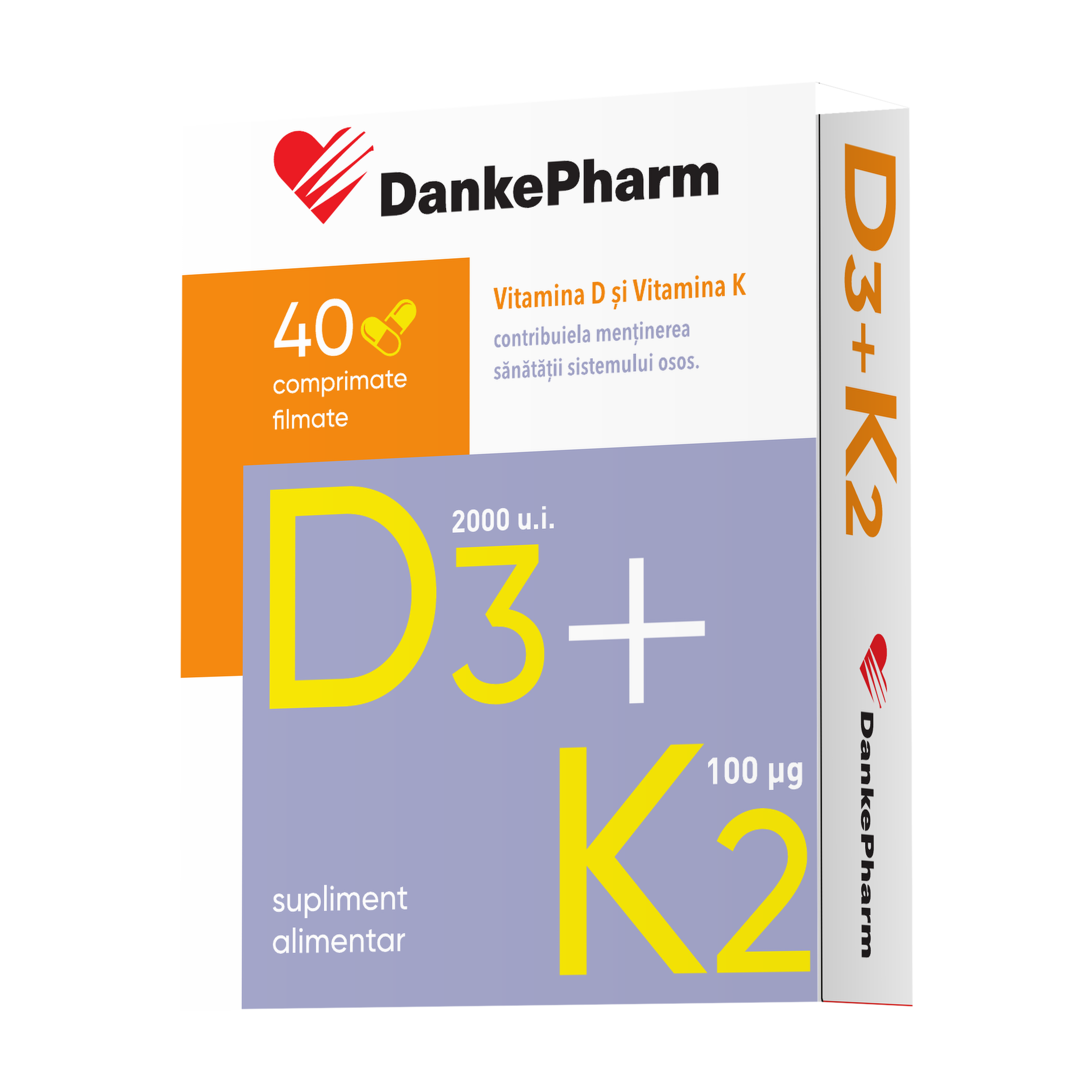
In conclusion, vitamins D3 and K2 represent an important pair in modern nutrition, having distinct but complementary roles in maintaining health. Vitamin D3 contributes to the normal absorption and utilization of calcium, while vitamin K2 contributes to the maintenance of normal bones and to normal blood clotting. Recognition of this synergy has led to the frequent inclusion of both vitamins in European food supplement formulations, offering an integrated approach to supporting well-being. To support overall well-being, DANKEPHARM offers products such as Vitamina D3 K2, designed to contribute to optimal health. It is important to remember that food supplements should not replace a varied and balanced diet and a healthy lifestyle.
The information in this article is general and does not replace advice from a doctor or pharmacist. Food supplements are not a substitute for a varied, balanced diet and a healthy lifestyle.
- #vitamina K2
- #vitamina D
- #oase